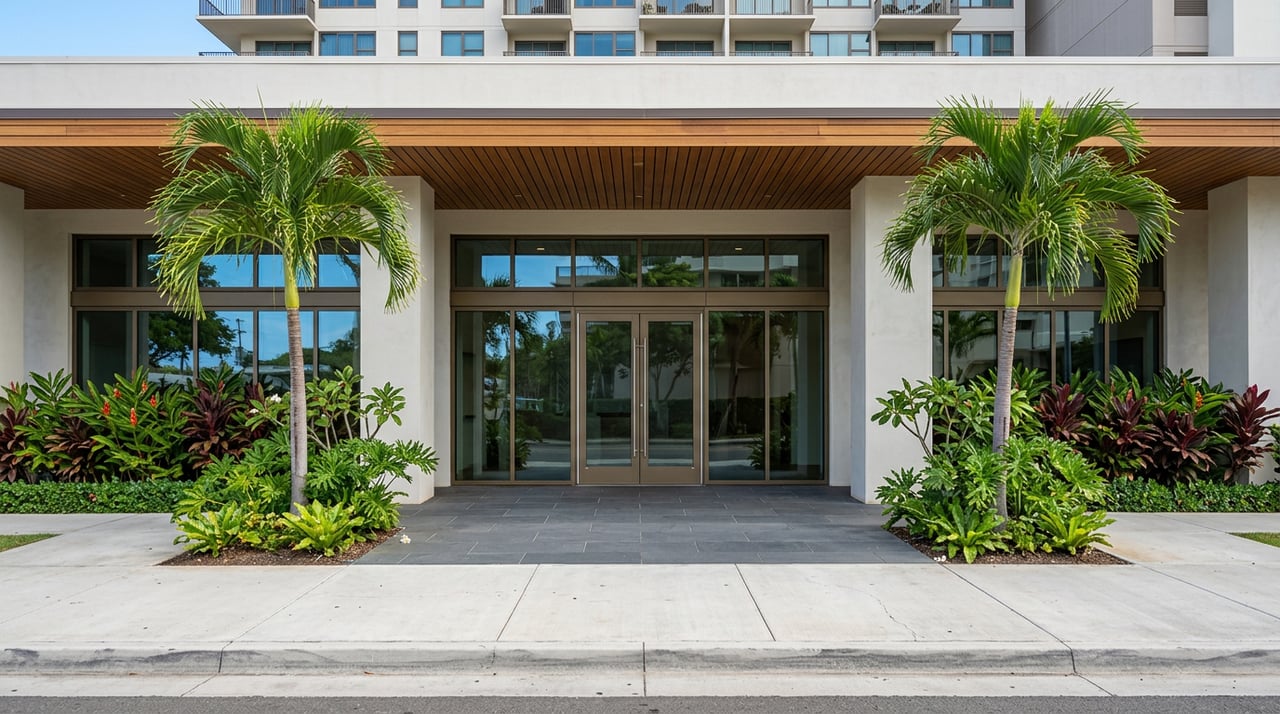
If you are thinking about selling an investment property and repositioning that equity into Oahu real estate, a 1031 exchange can be a powerful tool. It can also go sideways quickly if the structure, timing, and tax details are not handled correctly. This guide will walk you through the core federal rules, Hawaii-specific issues, and practical planning points that matter when you use a 1031 exchange to acquire property on Oahu. Let’s dive in.
How a 1031 exchange works
A 1031 exchange lets you defer capital gains tax, not erase it, when you sell one qualifying investment or business-use property and acquire another qualifying property. Under IRS guidance on like-kind exchanges, both the property you sell and the property you buy must be real property held for investment or for use in a trade or business.
That distinction matters. Property held primarily for sale or for personal use does not qualify. In practical terms, investment real estate such as land, rental property, buildings, and some dwelling units held for investment can qualify under the federal rules.
Why Oahu can fit a mainland exchange
If you own investment real estate on the mainland, you can generally exchange into Oahu property because both properties are U.S. real property. The IRS makes clear that U.S. real estate is generally like-kind to other U.S. real estate, while foreign real property is not like-kind to U.S. real property under Publication 544.
For investors looking at Honolulu, that means a mainland rental, commercial asset, or land parcel may be exchanged into an Oahu condo, apartment unit, land parcel, or other qualifying investment property, assuming the rest of the exchange is structured properly.
Which Oahu properties may qualify
Many buyers ask whether a condo or apartment unit can qualify. The answer is yes, if the property is held for investment or business use and otherwise meets 1031 requirements under IRS Publication 544.
That can be especially relevant on Oahu, where investors may evaluate options such as luxury condos, multi-unit assets, land, or other income-producing property. The key is not the property style alone. The key is how the property is held and used.
Leasehold interests may qualify too
Oahu investors also sometimes consider leasehold property. The IRS states that a real estate lease with 30 years or longer remaining can qualify as like-kind property under Publication 544.
That is an important nuance in Hawaii, where leasehold interests can be part of the investment landscape. If you are evaluating a leasehold replacement property, the term and structure deserve close review before you commit.
The 45-day and 180-day deadlines
The biggest source of failed exchanges is simple: missing the timeline. According to the IRS Form 8824 instructions, you must identify your replacement property within 45 days after transferring the relinquished property.
You must then receive the replacement property within 180 days after the transfer, or by the due date of your tax return for that year, whichever comes first. The identification must also be made in writing. These are firm deadlines, so exchange planning should begin before your sale closes.
Why a qualified intermediary matters
A deferred 1031 exchange typically depends on a qualified intermediary, often called a QI. Under IRS rules, the QI must not be a disqualified person and must act under a written exchange agreement to acquire and transfer the relinquished and replacement properties.
Just as important, the exchange agreement must limit your ability to receive, pledge, borrow, or otherwise use the exchange funds. If you have actual or constructive receipt of the proceeds, the exchange can fail. That is why the QI should be in place before closing, not after.
What boot means for your taxes
Even a well-planned exchange can create taxable exposure if you receive cash, non-like-kind property, or net debt relief. The IRS treats those items as boot, which can trigger recognized gain under Publication 544.
In short, a 1031 exchange is not all-or-nothing. You may still defer a large portion of gain while recognizing tax on the boot portion. The exchange must also be reported on Form 8824, even if no gain is currently recognized.
Hawaii tax rules still matter
Hawaii generally conforms to IRC Section 1031. According to the Hawaii Department of Taxation, you do not need to replace Hawaii property with another Hawaii property in order to fit the state's conformity rules.
That said, if any gain is recognized in the exchange, part of the transaction can still be taxable. This is one of the most common misunderstandings. A 1031 exchange can be highly useful, but it does not make every state or local tax issue disappear.
Rental taxes on Oahu investment property
If your replacement property on Oahu will be a rental, you also need to underwrite the ongoing tax picture. The Hawaii Department of Taxation rental guidance states that rental income from Hawaii real property is subject to Hawaii income tax and the General Excise Tax, or GET.
Long-term rentals must register for a GET license and file GET returns. Short-term rentals may also be subject to the Transient Accommodations Tax, or TAT, along with local county rules. For investors comparing property types, this is a practical part of the acquisition decision, not just a post-closing detail.
Honolulu property tax classifications
On Oahu, county property taxes are class-based, so the classification of your replacement property can affect your carrying costs. The City and County of Honolulu 2025-26 published rates include Residential at $3.50 per $1,000 of net taxable value, Commercial at $12.40, Hotel and Resort at $13.90, Residential A at $4.00 on the first $1 million and $11.40 above that, and Transient Vacation at $9.00 up to $800,000 and $11.50 above that.
For investors considering different Oahu asset types, these class-based rates can materially affect projected returns. A property’s tax classification should be reviewed alongside income potential, holding strategy, and use restrictions.
If Hawaii property is the one being sold
If the property you are selling is in Hawaii, withholding rules may also come into play. Hawaii’s HARPTA tax facts state that if any amount of gain is recognized in a Section 1031 exchange, the Form N-289 exemption cannot be used to avoid withholding.
That does not mean every exchange will trigger the same outcome, but it does mean the disposition side of the transaction needs careful review. This is especially important when the exchange includes boot or another source of recognized gain.
Reverse exchanges can help in tight inventory
Oahu inventory can be competitive, especially when you are targeting a specific property type, location, or price point. If you need to secure the replacement property before your sale closes, the IRS allows certain reverse exchange structures through a qualified exchange accommodation arrangement and an exchange accommodation titleholder, as described in IRS Publication 544.
Even then, the same core 45-day and 180-day timing framework still applies. Reverse exchanges can create flexibility, but they also require careful coordination and early planning.
Common mistakes to avoid
A 1031 exchange into Oahu is often won or lost before the closing table. The planning issues are usually more important than the paperwork signed on closing day.
Here are some of the most common pitfalls:
- Missing the 45-day identification deadline
- Missing the 180-day acquisition deadline
- Taking possession of exchange proceeds
- Receiving boot without understanding the tax impact
- Buying property held primarily for sale or personal use
- Overlooking Hawaii rental tax obligations such as GET and, where applicable, TAT
- Ignoring Honolulu property tax classifications when underwriting returns
- Assuming related-party, intermediary, or disregarded-entity structures are routine
The IRS Form 8824 instructions also note that related-party transactions and certain entity structures need special care. In some cases, a two-year holding period can matter after certain related-party exchanges.
Planning ahead if you may live there later
Some investors acquire Oahu property with a long-term plan to eventually convert it to personal use. If that is part of your thinking, it is worth discussing early with your tax adviser. According to the Hawaii Form N-103 instructions, the home-sale exclusion is not available if the home was acquired through a like-kind exchange within the prior five years.
That does not prevent an exchange. It simply means your future exit strategy should be considered at the acquisition stage, not years later when your plans change.
Building the right Oahu acquisition strategy
For many investors, the real value of a 1031 exchange is the ability to reposition capital into a market and asset type that better fits long-term goals. On Oahu, that could mean moving from a mainland asset into a luxury condo, an income property, a land parcel, a leasehold interest that meets federal requirements, or another qualifying investment property.
The right fit depends on more than the exchange rules. You also need to evaluate property tax classification, rental tax exposure, acquisition timing, and the realities of Oahu inventory. When those moving parts are coordinated early, a 1031 exchange can become a very effective way to acquire Oahu real estate with greater precision and less friction.
If you are planning to exchange into Oahu property, working with a local broker who understands complex acquisitions, investor underwriting, and Hawaii-specific property considerations can make the process far more efficient. For discreet, principal-led guidance on identifying and securing the right Oahu opportunity, connect with Steve Cohen.
FAQs
Can a mainland investment property be exchanged into Oahu real estate?
- Yes. Under IRS Publication 544, mainland U.S. real property can generally be exchanged into Oahu property because both are U.S. real property.
Can an Oahu condo qualify for a 1031 exchange?
- Yes. A condo or apartment unit can qualify if it is held for investment or business use and otherwise meets the federal 1031 rules in IRS Publication 544.
Can a leasehold interest on Oahu qualify for a 1031 exchange?
- It can, if the real estate lease runs 30 years or longer, according to IRS Publication 544.
What are the 1031 exchange deadlines for buying Oahu property?
- The replacement property must be identified within 45 days and received within 180 days, or by the due date of the tax return for the year of transfer, whichever is earlier, under the IRS Form 8824 instructions.
Does a 1031 exchange eliminate Hawaii taxes on an Oahu rental property?
- No. Hawaii conforms to Section 1031, but recognized gain can still be taxable, and Hawaii rental income may be subject to income tax and GET under the Hawaii Department of Taxation rental guidance.
Do Honolulu property tax rates vary by property type?
- Yes. Honolulu uses class-based property tax rates, and published rates vary across classifications such as Residential, Commercial, Hotel and Resort, Residential A, and Transient Vacation according to the City and County of Honolulu rate schedule.