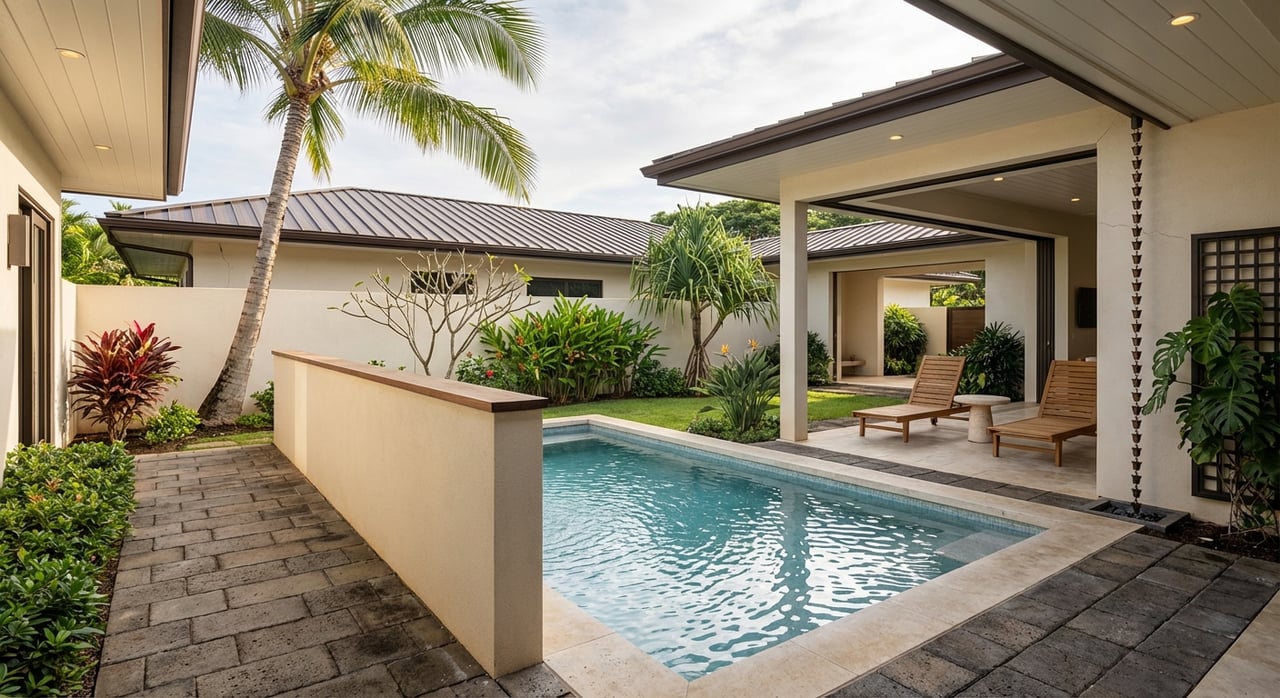
Picture morning coffee on a shaded lanai, trade winds moving softly through the space, and the ocean framed just right. That is the promise of Lanikai when outdoor living is designed with the wind, salt air, and shoreline in mind. If you are buying or planning a remodel here, the details matter more than in most places.
This guide shows you how to shape lanais, courtyards, pools, and ocean‑view spaces that work year‑round in Lanikai’s microclimate. You will learn what to look for on a property tour, which materials last near the sea, and the rules that shape what you can build. Let’s dive in.
Lanikai climate essentials
Lanikai sits on the windward side of Oʻahu. You get higher humidity, more frequent onshore breezes, and orographic rain compared with leeward neighborhoods. The regional trade winds blow most often from the northeast and are very persistent in summer. That makes passive cooling a reliable strategy on many lots. You will also find pockets of calm in sheltered locations, so each property feels a little different. Regional climate data helps set expectations.
What trade winds mean for layout
Homes that align openings to the prevailing winds cool naturally. Narrower floor plans, paired openings, and breezeways allow air to move through the living spaces. Courtyards help tame wind speed for comfort while keeping view lines clear. Guidance on natural ventilation principles from ASHRAE backs this approach to passive cooling in warm climates. You can review those concepts in this natural ventilation design reference.
Plan a covered lanai that works
A well‑designed lanai is your outdoor living room. It should stay usable through brief rain, midday sun, and salty breezes so you can dine, read, or entertain without moving indoors.
Depth, overhangs and drainage
Aim for generous covered depth and thoughtful roof overhangs. Shade reduces solar gain inside the home and makes the lanai comfortable for more hours each day. Floors should be slightly sloped for drainage, with scuppers and gutters sized to shed sudden showers. For useful design principles on shading and overhangs, see this tropical design and shading guide.
Screens, shutters and weather protection
Operable insect and storm screens expand your usable hours by cutting wind, glare, and spray when needed. Roll‑down UV or hurricane screens are practical on exposed edges. Look for durable hardware and easy maintenance access.
Big openings that connect to the view
Large sliding or folding doors help interior spaces flow to the lanai. On ocean‑facing sides, openings should be specified for local wind and impact requirements or have deployable protection. This is essential for comfort and code compliance.
Courtyards, breezeways and pool placement
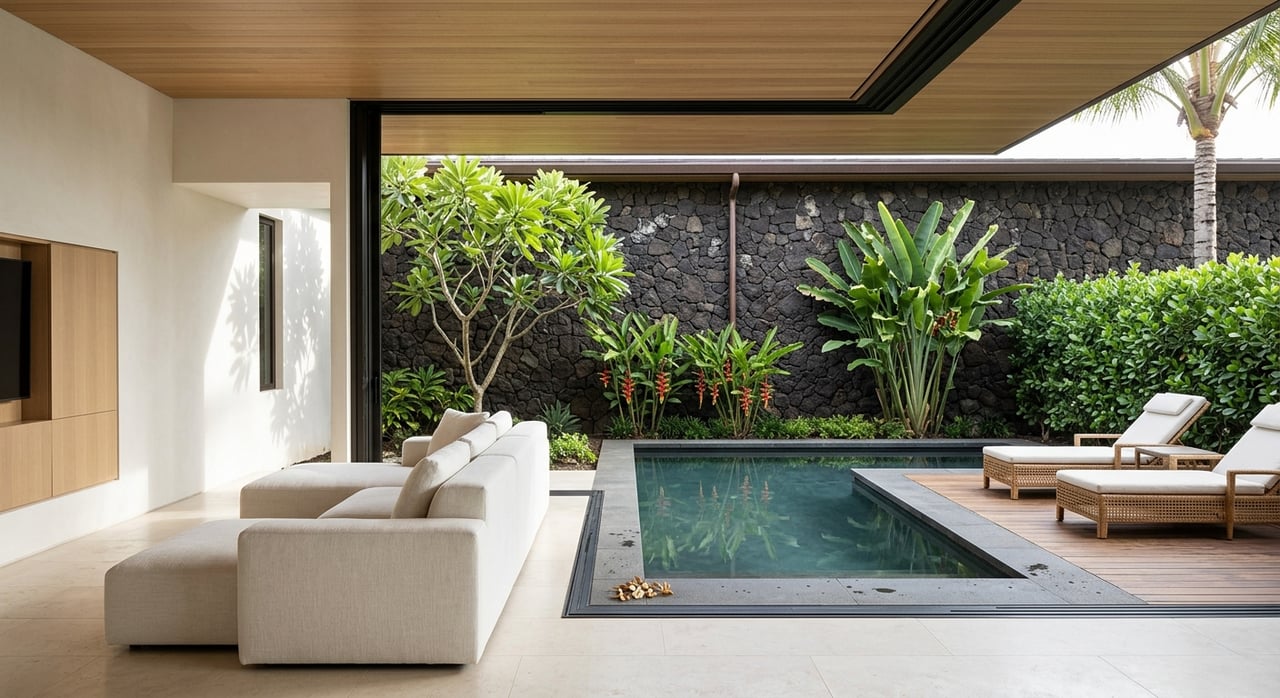
Courtyards act like outdoor living rooms that are cooler and calmer than the shoreline edge. Place pools and sitting areas to balance views with wind comfort and privacy. On some lots, moving the pool mauka creates a sheltered microclimate that reduces spray and evaporation while keeping sightlines to the ocean from main rooms. For a deeper dive into airflow and comfort planning, reference the ASHRAE ventilation guide.
Ocean‑facing glass and guardrails
Glazing on the ocean side must meet Honolulu’s wind and impact provisions. Large sliders should be impact rated or paired with deployable panels. Railings and fasteners need corrosion‑resistant attachments and detailing that allows freshwater rinsing. You can confirm baseline wind design and opening protection requirements in the Honolulu building code.
Shade, landscape and microclimate
Layered planting can create filtered shade, privacy, and wind moderation without blocking views. Salt‑tolerant coastal species are a good starting point near dunes and shoreline. Always verify what is allowed and recommended before shoreline planting. The state’s viewer offers coastal context and planning guidance for sea level rise and shoreline dynamics. Explore the Sea Level Rise Viewer as part of your due diligence.
Outdoor kitchens and service zones
Keep grills and appliances under cover and away from the most wind‑exposed edges. Choose marine‑grade materials for cabinets, hinges, and fixtures to limit corrosion. A lanai with roll‑down screens plus careful splash and grease control greatly reduces maintenance. For an overview of weather‑resistant outdoor kitchen materials, review this materials guide for coastal kitchens.
Materials that survive salt air
Living near the ocean is a gift. It is also a place where material choices pay for themselves in reduced upkeep.
Metals and corrosion
Salt‑laden air accelerates corrosion. Use marine‑grade fasteners and hardware and avoid mixing dissimilar metals. Even the best alloys benefit from periodic freshwater rinsing. For a practical summary of metal performance near the sea, see this coastal metal use overview.
Roofing and drainage
Select roofing and coatings specified for coastal exposure and design details that prevent salt from pooling. Gutters and scuppers should be sized and maintained, since good drainage extends the life of metal finishes. Learn more in this coastal roofing guide.
Decking and floor finishes
Capped composite or PVC decking can reduce refinish cycles. If you prefer hardwoods, plan for regular oiling and use corrosion‑resistant fasteners. Protect the substructure with joist flashing or a galvanic strategy so the deck surface and frame age together.
Fabrics and furniture
Choose marine‑grade upholstery and awning fabrics for cushions and shades. They resist UV, mildew, and salt better than standard outdoor textiles and help keep spaces guest‑ready.
Cooling and ventilation
Prioritize passive cooling to cut AC run time. Ceiling fans, shaded courtyards, and aligned openings work well in Lanikai. When you add AC, high‑efficiency split systems with accessible outdoor units allow routine rinsing and service.
Pool systems
Specify equipment rated for coastal conditions or place it in a sheltered mechanical area. Covers and efficient pumps help conserve water on an island grid and reduce evaporation on breezy days.
Maintenance cadence
Set a simple schedule. Rinse metal fittings, check glazing and sealants annually, and inspect decks and elevated lanais every few years. Keep a maintenance log. It protects your investment and helps with future resale disclosures.
Know the rules before you build
Lanikai’s shoreline is dynamic. Honolulu has updated rules that affect where you can build outdoor spaces and what permits you will need.
Shoreline setbacks and SMA
Honolulu’s Ordinance 23‑3 established erosion‑based shoreline setbacks. Many urban shoreline lots now have a 60‑foot minimum setback and some require more. This can limit where you place new covered lanais, pool decks, and other makai features. Always verify whether a parcel is a certified shoreline lot and whether improvements will trigger SMA permits. Review the ordinance text and mapping process in Ordinance 23‑3 materials.
Sea level rise planning
Hawaiʻi planning guidance recommends using about 4 feet of sea level rise for general planning. The state viewer maps the Sea Level Rise Exposure Area, which includes passive flooding, high‑wave flooding, and erosion. Check the parcel’s TMK in the Sea Level Rise Viewer and incorporate that into your long‑term outdoor living plan.
Flood and tsunami mapping
Confirm FEMA and state flood mapping to understand elevation and structural requirements that could affect lanai and pool design. Start with Honolulu’s resources here: flood and hazard maps.
Building code basics
Honolulu’s building code sets wind design and opening protection requirements that influence large ocean‑facing glass and doors. Plan for impact‑rated glazing or deployable protection on exposed elevations. Confirm details with your architect or builder using the city’s code library.
Required coastal disclosure
If a residential parcel lies inside the Sea Level Rise Exposure Area, Hawaiʻi law requires seller disclosure. This is important for buyers and sellers planning significant outdoor features. See the statute here: HRS §508D‑15.
On‑site walkthrough checklist
Use this quick lens when touring a Lanikai property or planning a remodel:
- Shoreline and setback: Where is the current shoreline setback line, and is the lot a certified shoreline lot?
- Sea level rise and flood: Is the parcel in the SLR‑XA or a FEMA coastal flood zone?
- Wind exposure and glazing: Are ocean‑side openings impact rated or protected?
- Covered outdoor area: How many square feet of truly covered lanai are usable year‑round?
- Corrosion resistance: Are railings, fasteners, and outdoor kitchen components marine grade?
- Roofing and drainage: Are materials coastal rated, with clean scuppers and gutters?
- Pool siting and equipment: Is the pool shielded from prevailing winds, and is equipment sheltered?
- Landscape and erosion: Are plantings appropriate for coastal conditions and permitted?
- Utilities and wastewater: Are there known septic or cesspool considerations that affect site planning?
- Permitting history: Request prior permits, surveys, SMA determinations, and any SLR‑XA disclosures.
Retrofit cost lens
- Lower complexity: Swap exterior fasteners and hardware for marine‑grade, add ceiling fans, fine‑tune drainage, and add roll‑down insect or UV screens.
- Medium complexity: Build a courtyard windbreak, relocate an outdoor kitchen to a sheltered zone, add deployable storm panels, or rework pool equipment access.
- Higher complexity: Enlarge a covered lanai or reposition major openings. These can trigger shoreline setback or SMA reviews, so confirm permit needs early.
Thoughtful design gives you the Lanikai lifestyle without constant upkeep. When you pair smart orientation and shading with the right materials and a clear read on shoreline rules, your outdoor spaces stay comfortable and beautiful through the seasons.
Ready to evaluate a specific Lanikai property or plan a remodel with the right permits and materials in mind? Schedule a Private Consultation with Steve Cohen for principal‑led guidance and a discreet, data‑driven plan.
FAQs
What makes Lanikai’s climate unique for outdoor living?
- Windward exposure brings frequent trade winds, higher humidity, and orographic rain, so designs that maximize shade, cross‑ventilation, and salt‑resistant materials perform best.
How do shoreline setbacks affect a lanai or pool plan in Lanikai?
- Honolulu’s Ordinance 23‑3 uses erosion‑based setbacks that often start at 60 feet and can be larger, which can limit where new covered lanais or pools are allowed on shoreline lots.
What should I check before buying a Lanikai shoreline home?
- Verify the shoreline setback line, SMA status, FEMA flood zone, and whether the parcel lies in the Sea Level Rise Exposure Area, which also carries a seller disclosure requirement.
Which materials last longer near the ocean in Kailua?
- Marine‑grade stainless hardware, coastal‑rated roofing and coatings, composite or carefully detailed hardwood decking, and marine fabrics help control corrosion and upkeep.
How can I reduce AC use in a Lanikai home?
- Align openings to the trades, use shaded courtyards and deep overhangs, add ceiling fans, and limit direct sun on glass to keep interiors cool with less mechanical cooling.